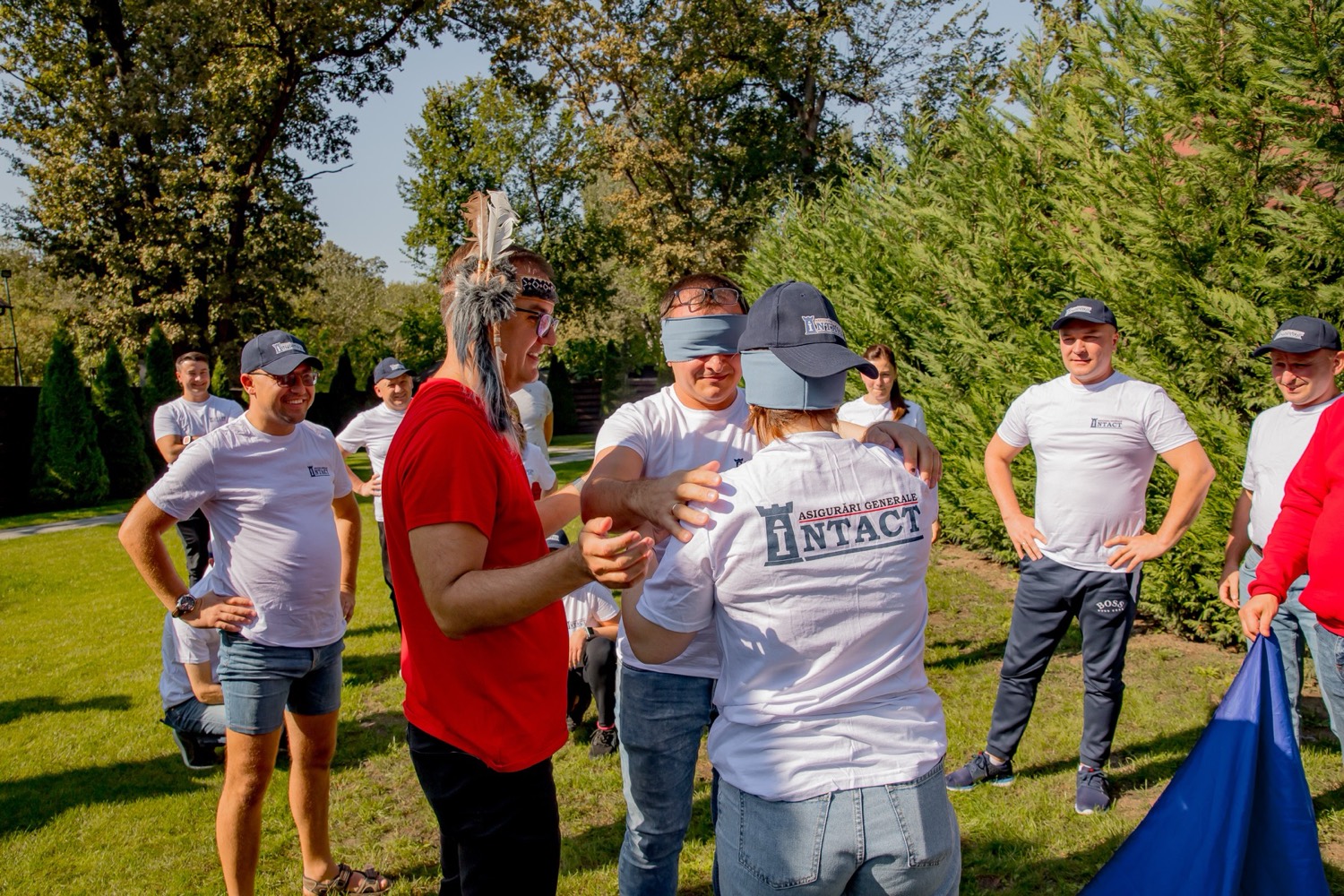
How to choose the right team building format for your team
Do not ask what games they have. Ask yourself what should be different on Monday morning — and the format almost picks itself.
 Mihail Popescu

The first question I get from clients is nearly always: “what formats do you have?”
It is a reasonable question and I answer it. But it is a good second question, not a first one.
The first one is different: what exactly should be different in your team afterwards? Answer that, and the format almost picks itself. Fail to answer it, and you choose by the photographs — and end up with a nice day that solves nothing.
Below is how I choose, in the conversation before the proposal.
First: is it actually a team problem?
Sometimes it is not. Thirty seconds of honesty is worth it before you spend the budget.
It is not a team problem if people do not know what is expected of them, if the processes are broken, if a manager has been avoiding hard conversations for six months, or if salaries are below market. Team building fixes none of these. It covers them for a day.
It is a team problem if people cope individually but not together; if information gets stuck between departments; if the team has grown or been reorganised and people still do not know each other; or if they work more in writing than face to face and have become functions to each other rather than people.
If you are in the second category, we carry on.
Four situations and what fits them
“People do not know each other”
A team that grew fast, a merger, or departments that have never met. Here you need a shared story — something people retell for months, because that is what creates the familiarity no meeting ever creates.
Narrative formats fit: The Captain’s Treasure, where the crews depend on each other to find the route, or Forest Quest, which scales easily to large groups and gets everybody moving.
“Information gets stuck on the way”
Most often: a person, a department or a manager who holds on to what they know — frequently with no bad intent, simply because nobody ever asked otherwise.
Here you need a format that splits the information on purpose, so it becomes visible who holds it and who passes it on. Undercover Agent is built precisely on this: every participant gets a piece the others do not have, and the mission is only solved if the information travels.
The side effect is the valuable part: nobody is accused of anything, yet everybody sees the pattern.
“It is not clear who does what”
Teams where everyone does everything and therefore nobody is accountable for anything. Or departments that hand work to each other and blame each other for delays.
Team Factory is made for this. The team is given a metaphorical production process, runs it badly in the first round, then gets time to redesign it. Within half an hour you can see where the time is lost — and, unlike a meeting on the same subject, nobody gets defensive, because it is not about the real work. Until the debrief.
“My managers do not decide, they wait”
If the problem sits with the people who lead, energy formats will not help. You need a simulation that demands decisions with consequences.
Climbing Everest is the only format in our catalogue built specifically for management teams: clear objectives, insufficient resources, information that arrives late, and consequences that surface two stages later, when you can no longer turn back. It runs indoors, so it does not depend on the weather.
And if you want planning and prioritisation in project teams rather than leadership teams, then The Journey to Mars.
And if I just want a good day?
Entirely legitimate. Not everything you do with your team has to carry a development objective.
If the point is the atmosphere, the energy and people enjoying each other’s company, The Mount Olympus Games is the best choice — the challenges do not require athletes, so even the people who usually stay on the sidelines take part.
My only request: call it a company party, not an investment in the team. Not out of pedantry, but so that in three months, when someone asks “what came out of that team building?”, the answer “we had a good time” is a correct answer rather than a disappointment.
Three things that matter more than the format
How many people. Below 15, competitive team formats stop making sense — there are not enough teams. Above 100, you need several coordinators and a format that scales.
How much time. Under three hours there is no room for a serious debrief, and without it you have entertainment. If the time budget is two hours, pick a simple format and accept that it is a pleasant break, not an instrument.
What happens the next day. The best team building in the world evaporates if nobody returns to the written commitments. Decide in advance who reminds people and when — otherwise you are paying for a day, not for a change.
You can see them all on the team building page. But if you want a shortcut: write to me about what annoys you in the way your team works right now. In thirty minutes I will tell you which format makes sense — or whether your problem is not one team building solves, which happens more often than you would imagine.