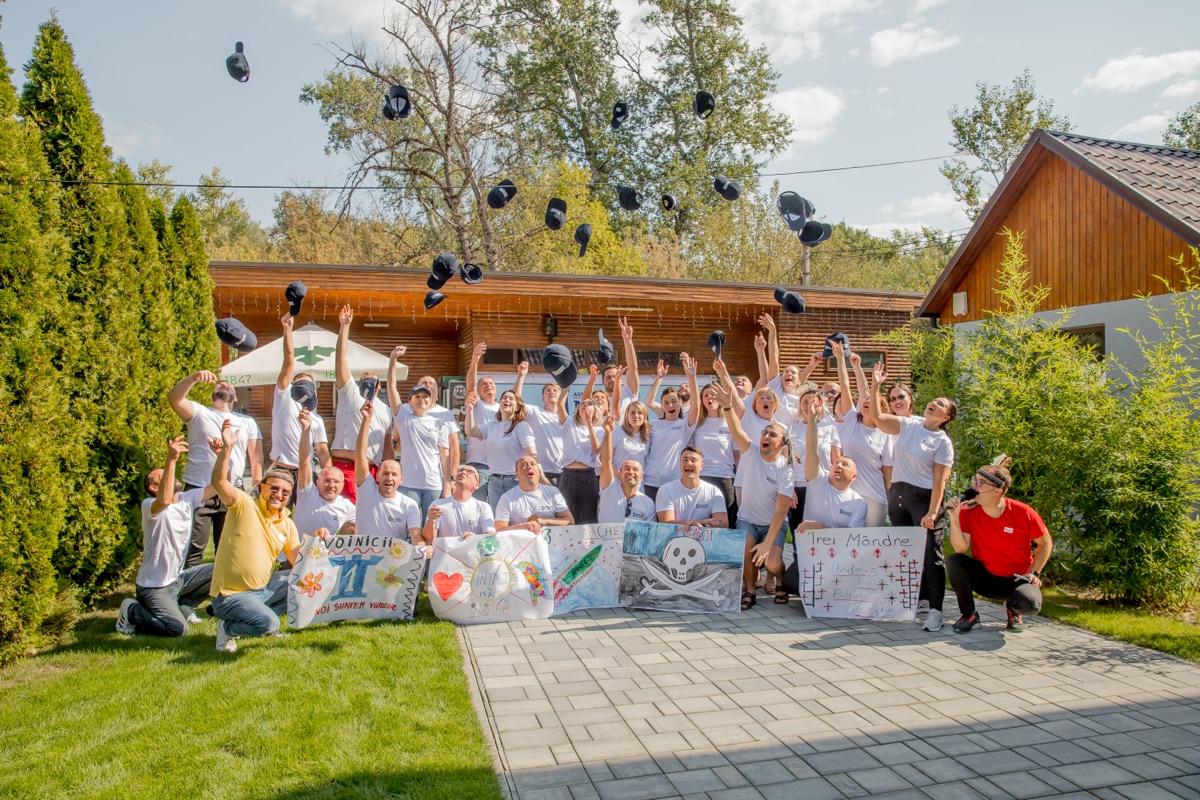
Team building without the barbecue: why 90% of them are forgotten by Wednesday
The difference between team building that changes something and team building that stays a nice day is one hour of the programme — the one almost everyone cuts.
 Mihail Popescu
I have been delivering team building for companies for over ten years. Let me give you the honest statistic first: most of them change nothing.
People enjoy themselves, take photos, come back to the office on Monday and work exactly as before. Three weeks later the only thing left is a folder of pictures on a shared drive.
That is not the fault of the games. The games are good. It is the fault of one hour that almost everyone cuts out of the programme — including the clients who call me.
The most frequent request I get
“We want something fun, two or three hours, nothing boring, something that makes people laugh.”
I understand it perfectly. The director calling has a tired team, a budget approved for this quarter and a free day in the calendar. They want people to feel good. It is a good intention.
Except that, phrased that way, the brief guarantees exactly the outcome above: a nice day, followed by zero change.
Because fun on its own produces nothing. It produces good spirits. And good spirits are spent within two days, like any other mood.
What actually happens in a team game
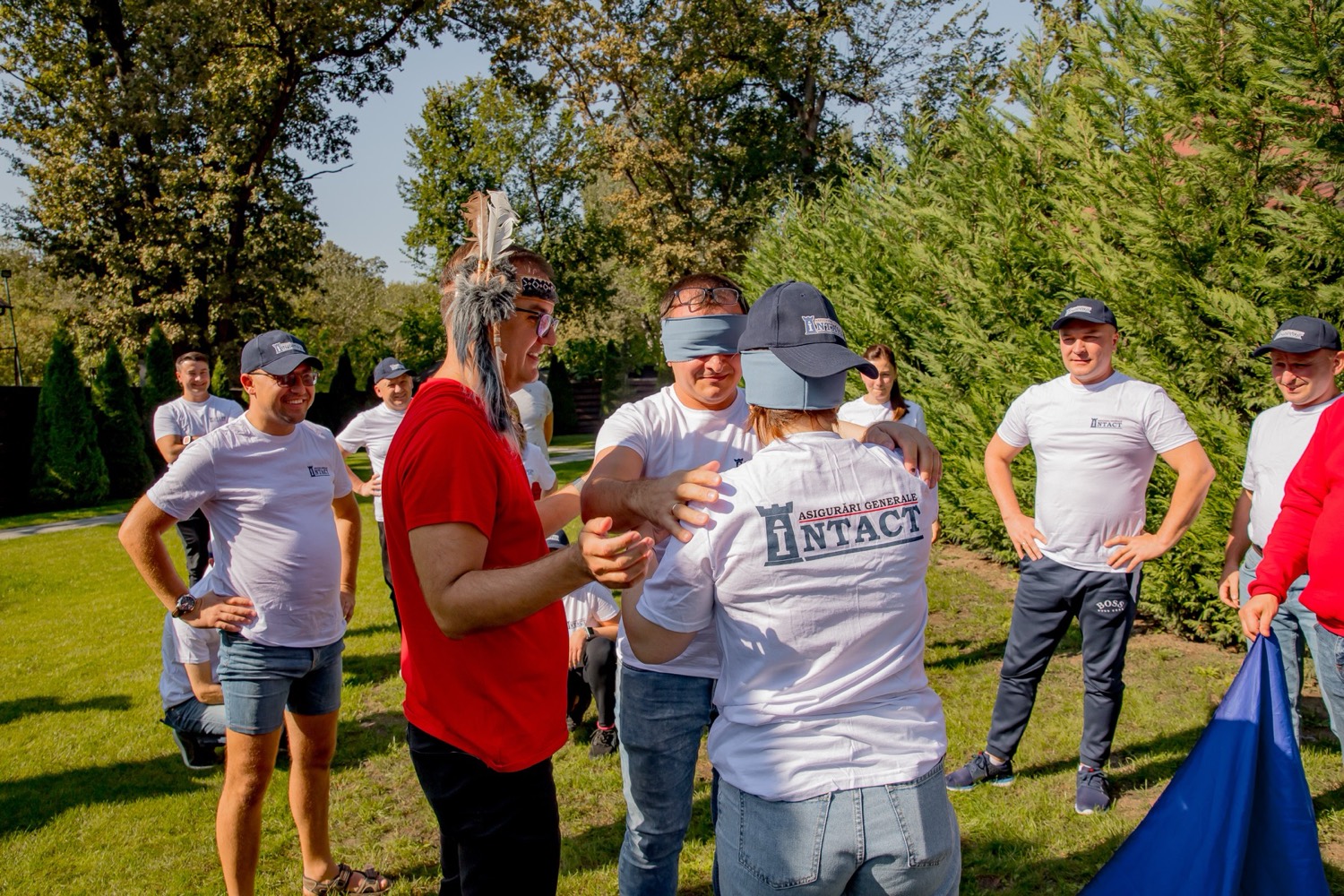
Let us take a concrete example, one of the exercises I run.
A group of seven people gets a tennis ball. The task: the ball must pass through everyone’s hands exactly once, in a fixed order, in under 90 seconds. Round one — timed. Then the group has five minutes to redesign its process, the target being under 60 seconds. Then under 30.
What always happens: groups start with the obvious solution — they stand in a circle and pass the ball along. They get to around forty seconds and stall. They are convinced it cannot go faster.
And then, in one of the teams, someone says something like: “hold on, where does it say we have to pass it?”. They stack all their hands one over the other, in the required order, and drop the ball through them. Three seconds.
That moment is valuable. But not because it is spectacular.
It is valuable because the group has just discovered, first hand, that their assumption about how the work had to be done was more limiting than the actual rule. Nobody had asked them to pass the ball. They assumed it.
The hour everybody cuts
This is the whole article.
If you move straight to the next game after that exercise, you have provided entertainment. People laughed, applauded, and forgot.
If instead you stop and ask four questions — what did you do in round one that you later changed? who proposed the idea that changed everything, and was it accepted immediately? what stopped you thinking of it earlier? what assumption were you protecting? — something else happens.
Someone in the team almost always says: “well, that is roughly how we do the monthly report.”
That sentence is why the whole event was organised.
That conversation is called the debrief, and it takes about as long as the exercise itself. It is the boring part of the agenda, the one clients cut first when they want to “fit in more activities”. And it is the only part that produces something visible on Monday morning.
Without it, team building is a party with obstacles.
Three written sentences, not fourteen
The second thing that is almost always missing: the event ends with applause and a group photo.
With us it ends with a question put to the whole team: “what will we do differently in how we communicate with each other, starting tomorrow?”
The answers are collected, clustered on the spot into three commitments, and the team votes on the wording. Not fourteen. Three. They are photographed and sent to everyone within 24 hours, co-signed by the team leaders.
Here are three that came out of real events:
- “When I do not understand a written message, I ask — by voice, the same day.”
- “I use my colleague’s name at the start of a message, not their function.”
- “Once a month, each of us shares one non-work thing in the group channel.”
They look small. The first one solves the most expensive problem of teams that work in writing: ambiguity resolved by avoidance.
How to check whether it was worth anything
Thirty days after the event we look at four things. None of them requires a satisfaction survey:
- Do people use each other’s names in messages between teams? Check by opening ten threads.
- Are there pairs of colleagues from different departments talking directly, outside of tasks?
- Have “I did not understand what they meant” situations dropped? Two questions to the team, that is all.
- Are the three commitments still visible somewhere, and does anyone still refer to them?
If none of that is true, the event was a nice day. That can happen. Let us both just know it in advance, and not call it an investment in the team.
What to ask for, if you are organising one
Whoever delivers it — me or someone else — ask for three things in the proposal:
What gets discussed after each challenge. If the agenda lists only activities, one after another, you are buying entertainment. Look for the word “debrief” or a discussion slot with time allocated to it.
What the team leaves with in writing. Not certificates. Commitments worded by them, not by the facilitator.
How it gets checked a month later. If nobody proposes anything here, nobody intends to be accountable for the outcome.
And if you simply want a good day together, with a barbecue and games — that is entirely legitimate, and we organise those too. But let us call it a company party. It is a good thing. It is just not the same thing.
If you have a team that grew fast, went through a reorganisation, or works more in writing than face to face, let us talk for thirty minutes. You tell me what should be different afterwards, and I will tell you which format makes sense — or whether your problem is not one a team building event solves.