+34% in sales with no new hires: the anatomy of the Orthodontica project
Orthodontica grew revenue 34% in one year with the same people. I show you the mechanism, step by step — not just the result.
 Mihail Popescu
In 2025, the Orthodontica clinic’s revenue grew by 34% over 2024. Total patient numbers — by 40%.
Without a single new hire in sales.
The same doctors, the same front desk, the same telesales. A different communication system.
The result can’t be copied. The mechanism can. So let me walk you through the mechanism.
The project started in growth, not in crisis
Most directors call a trainer when the numbers drop. Orthodontica was the exact opposite: new premises, a wave of inquiries, a bigger team.
Growth doesn’t hide problems. It brings them to the surface. When the number of inquiries multiplies, every crack in the way you talk to the customer multiplies with it.
The clinic had a CRM. It had good people. It had demand. And still:
“We ran into difficulties in maintaining the quality of service. We worked on standardizing communication — and we have certainly improved the level and quality of service for our patients.”
— Dr. Cornel Vîrlan, founder, Orthodontica
Note the phrase: maintaining the quality. Not the absence of it. The problem wasn’t that people didn’t know how to talk to a patient. It was that each one talked their own way — and at high volume, “their own way” can no longer be maintained.
Why a CRM doesn’t solve this
A CRM is a database with a good memory. It tells you who called, when, what was discussed, when the next check-up is due. It tells you whether something happened.
It doesn’t tell you how.
The CRM records that the front desk called the patient. It doesn’t record whether they explained the treatment plan in the same terms the doctor used. It records that the quote went out. It doesn’t record whether the person understood what they were buying.
Software solves the record-keeping. It doesn’t solve the language.
That’s why companies that invest in a CRM and end up with the same numbers didn’t pick the wrong tool. They got the order wrong: they digitized a process that wasn’t a process yet.
“The patient journey” — what it means in practice
Step one of the project: we analyzed the patient’s journey from the first click to treatment.
It sounds like consultant-speak. It’s the most concrete thing in the whole project. It means listing every moment when a person comes into contact with the clinic:
- the ad they see and the promise inside it — marketing
- the call or the message that reaches them — telesales
- the moment they get an appointment slot — scheduling
- the first two minutes inside the clinic — the front desk
- the preparation and the explanations in the treatment room — the assistants
- the consultation and the treatment plan — the doctors
Six roles. Six different people. One patient, who puts them all together.
The patient doesn’t see departments. He sees a clinic. And if those six voices don’t say the same thing, he doesn’t conclude “their process is inconsistent”. He concludes “they’re not sure” — and puts it off.
The most expensive loss in a service business isn’t the customer who says no. It’s the one who says “let me think about it” after being given three versions of the same story.
Standards written per role — the part that moves the number
Step two: we wrote communication standards, scripts, role sheets and checklists. For each role separately.
Not a general sixty-page manual that nobody reads. Tools for the job: what the telesales person says on the first call, what scheduling confirms, how the front desk opens, what the assistant explains before the patient walks into the treatment room, how the doctor presents the treatment plan.
The difference is enormous and almost nobody makes it.
“We are courteous with patients” is a value. You hang it on the wall.
“On the first call we confirm three things, in this order” is a standard. It gets learned, checked, corrected — and passed on to a new person in two days, not in three months.
That’s the explanation for “no new hires”: we didn’t add capacity. We removed the leakage. The same people, the same working hours, fewer conversations slipping through the cracks.
Six trainings. The whole team. Then a teambuilding
Step three: we trained the whole team across six trainings, delivered in December 2023 and January 2024. The whole team — not “the sales people”.
In a clinic, who sells? The doctor who explains why two sessions are needed, not one. The front desk that picks up the phone. The assistant who calms down a frightened person. Every point of contact is a moment where the patient decides whether he trusts you.
If you train only telesales, you have one person who speaks well and five who contradict him.
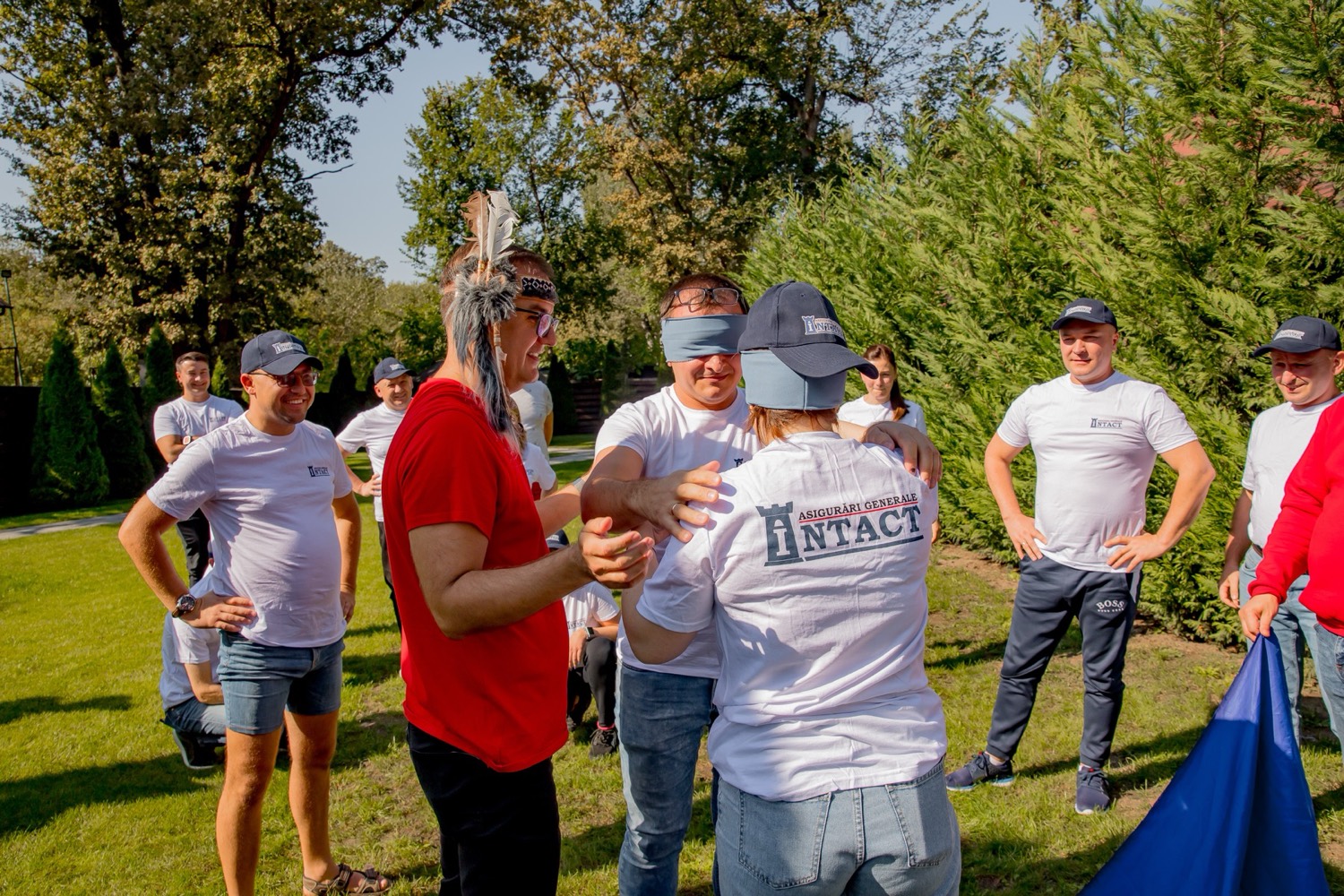
We closed with a teambuilding. Not as a reward. A shared standard holds among people who know each other and trust each other; between departments that avoid each other, the standard stays a document.
“We did this training in order to get all the clinic’s departments in sync. It taught everyone to speak on the same wavelength.”
— Dumitru, director, Orthodontica
The part almost everyone skips: measurement
A training without measurement is a pleasant day. That’s all.
That’s how I work, whatever the client: assessment before, assessment after, then I look at the real business numbers. Not at the feedback forms from the room — everyone gives high marks there, because people are polite and they have just laughed twice.
The numbers that matter come later and don’t depend on anyone’s mood: how many people called, how many came in, how many bought, how many came back.
That’s why you can read Orthodontica’s results below across a full year, compared with the year before. Not across one week of post-training enthusiasm.
If a training supplier doesn’t propose the measurement himself, ask him why. The answer tells you everything.
What the numbers say, beyond the +34%
The results, confirmed directly by the founder:
- +34% revenue in 2025 compared with 2024
- +40% total patients
- +30% new patients through referrals
- +25% tertiary patients — those who come back to the clinic at least 6 months after their last procedure
- +15% conversion from the first consultation to at least two procedures carried out
Before you read them, look at the calendar. The trainings finished in January 2024. The numbers above compare 2025 with 2024 — that is, the second year after the program against the first. This is not the novelty effect of a fresh training. It’s what’s left a year after the trainer walked out.
That, in fact, is the test most training projects fail: they work for three months, then the team goes back to its old habits. Here, the system kept producing in the second year.
Everyone reads the first number. I’m interested in the last three.
Revenue can grow off a spike: a good campaign, a competitor that shut down, a lucky season. It comes and it goes, and the following year you look at the chart and don’t understand what broke.
Referrals and returning patients don’t come from spikes.
Someone refers you when the experience was predictably good — not spectacular once, but predictable. Nobody puts their reputation on the line for a stroke of luck. A referral is the verdict a client passes on you when you’re not in the room.
And the tertiary patient — the one who comes back after six months or more — is the most honest measurement you can get. He’s had time to forget. He’s had time to compare. He has alternatives three hundred meters away. And he still comes back.
When revenue grows together with referrals and returning patients, the change is structural. You’ve built something that holds even after the trainer leaves.
Conversion from the first consultation to at least two procedures closes the loop: it shows that the conversation in the treatment room really does lead somewhere. That the person understood what was being proposed and why.
“Thanks to this training I improved my communication with patients, and the rate of happy clients went up.”
— Ecaterina, front desk manager, Orthodontica
What you can take from this case, even if you don’t run a clinic
Five things. They apply the same way in a transport company, a car service, an agency, a showroom, a bank. Anywhere the customer passes through several pairs of hands before saying yes.
1. Draw the customer journey, point by point. From the first contact to the money in the bank. On paper. You’ll see points of contact nobody thinks about — and that’s exactly where people get lost.
2. Count the voices. How many different employees speak to the same customer before the signature? If it’s more than two and you have no written standard, you already have different versions of your company out in the market.
3. Write the standard per role, not per company. A general document doesn’t change behaviors. A ten-line checklist for a specific job does.
4. Train everyone who touches the customer. Including the ones who “aren’t in sales”. Especially them.
5. Measure referrals and returning customers, not just receipts. Receipts tell you how the month went. Referrals tell you how the year will go.
Training changes people. The system keeps the change. Orthodontica is the proof that when you put both in place, you don’t need new people in order to grow by 34%.
If you recognize the problem — good team, good demand, but everyone talks to the customer differently — let’s talk for thirty minutes. You tell me what your customer’s journey looks like and I’ll tell you where you’re losing. The conversation is free and commits you to nothing.