What a sales training costs in Moldova in 2026 — and when it is NOT worth the money
My full 2026 rate card, published in the open — plus the six situations where a sales training is, honestly, money down the drain.
 Mihail Popescu
Most trainers don’t publish their prices. You write an email, you wait, you sit through a call, and only then do you find out whether you’re in budget or not.
I don’t see the point. Here are my 2026 numbers, in full. And, more importantly, here are the situations where you shouldn’t spend that money at all — not with me, not with anyone.
My 2026 rates
The minimum is one full training day. I don’t work below a day, because below a day nothing changes.
Sales training
- 1 day — €1,100
- 2 days — €2,200 (the option most people pick)
- 3 days — €2,940
- Groups of up to 12 people included. Above 12 — an extra €100 per person.
Leadership and management
- €1,300 for each program day, groups of up to 12 people.
Applied AI in business
- from €1,000 a day.
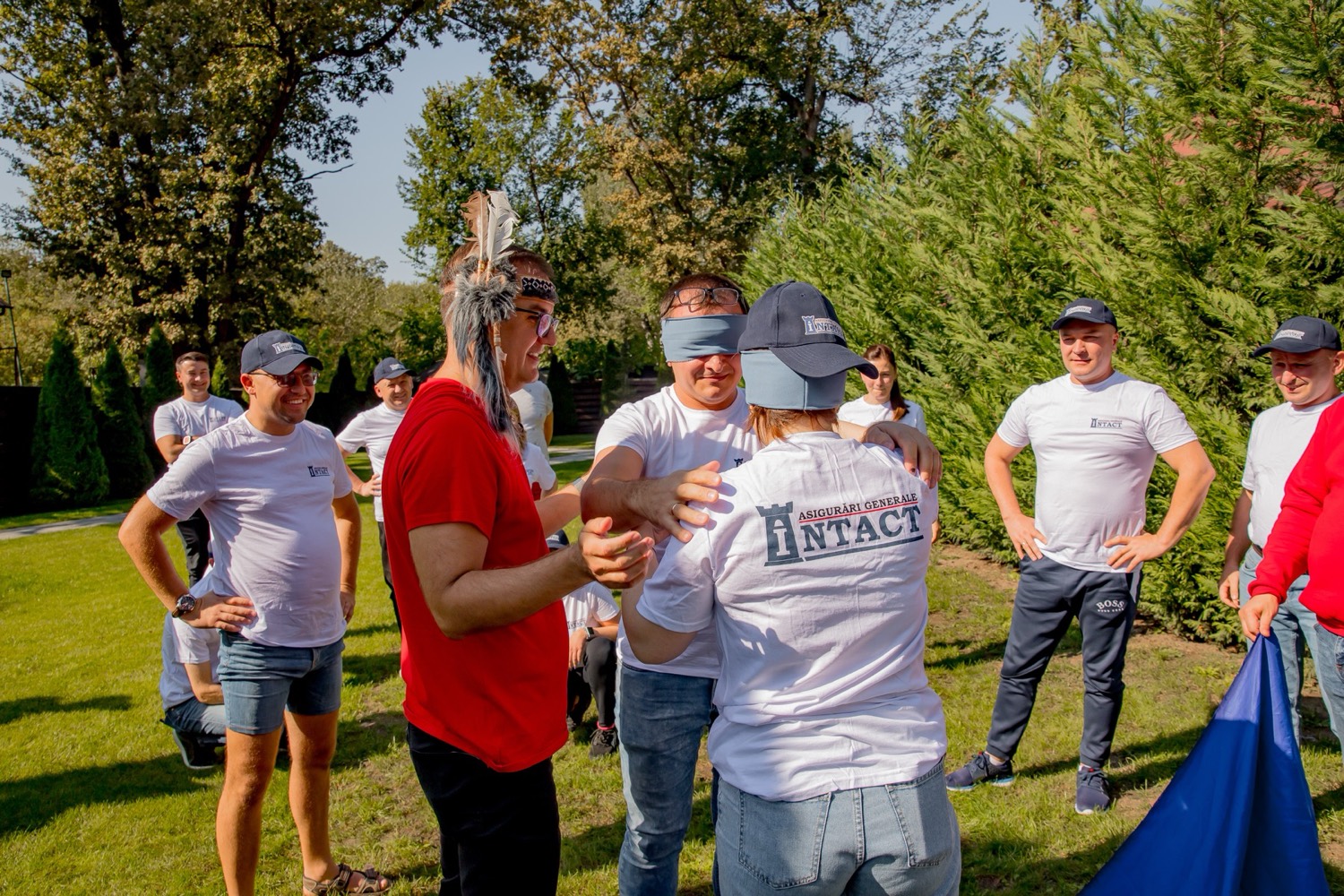
Teambuilding
- 4 hours — from €35 per person
- 8 hours — €45–85 per person
- For groups of 50 people and up, the rates come down.
Management mentoring
- €300 for one session, or €1,100 a month — four sessions plus support in between.
Consulting and organizational development
- projects from €2,500, after a diagnostic.
Talking Business Club
- €500 a year.
All prices above are final — no VAT is added.
The final price depends on three things: duration, number of participants and topic. The exact quote reaches you within 24 hours.
What that works out to per head
Divide it and see for yourself.
One day of sales training for a group of 12 people is €1,100, so around €92 per person. Two days for the same group — €2,200, roughly €183 per person. Three days — €2,940, or €245 per person; and if you look at it per program day, the third day costs you less than the first.
Above 12 people, add €100 for each extra head. A group of 20 people, two days: €2,200 plus €800, so €3,000 — €150 per person.
Now put that number next to something else: next to the margin you lose on a single order you missed because your person didn’t know how to handle an objection. Or next to the cost of replacing a salesperson who walks out. That’s where it gets decided whether a training is expensive or cheap. Not on the invoice.
What the price is actually made of
You’re not paying for the hours in the room. The day in the room is the tip. Underneath it sit four things you don’t see on the invoice, but you feel in the result.
The diagnostic. Before any program I listen to calls, go out into the field and look at your sales funnel. Not to tick a box, but to know where the money is really leaking — not where you think it’s leaking.
The design. The program is built on your customers and your objections. Real ones, not ones out of American books. That means days of preparation before I ever walk into the room.
The materials that stay behind. Scripts, checklists, standards. They stay in the company after I leave. Training changes people. The system keeps the change.
The measurement. Assessment before and after, plus the sales numbers at 90 days. Without that part, a training is an expense with nice photos.
In the room: between two and six modules, exercises and role plays filmed and analyzed on the spot. The filming is the most uncomfortable part and the most useful one. People see themselves, and then there’s no one left to argue with.
Why almost everyone picks two days
The two-day option is the one most people choose. Not by accident.
In a single day you get to cover the topic and get people to understand it. You don’t get to make them practice enough for anything to be different on Monday morning. Day one opens the head. Day two gets it into the hands.
Day two is when the serious role plays get filmed, when the scripts get rewritten around the objections that actually come up at your place, and when the standard gets set: what a good offer sounds like here, with us, not in general.
If your budget only stretches to one day, that’s fine — we go with a single topic, narrow and deep. But don’t ask me for three topics in one day. What comes out is a presentation, not a training.
What you don’t see in the price
The numbers above are program fees. What doesn’t appear separately on the invoice, but exists:
- The 30-minute diagnostic call — free, whether or not we end up working together.
- The analysis before the program: calls, field, funnel.
- Adapting the materials to your cases.
- The scripts, checklists and standards that stay with you.
- The assessment at the end and reading the numbers at 90 days.
When you compare two training quotes, look at exactly this list. The price difference between two suppliers is almost always explained by what’s missing from it.
When it is NOT worth the money
This is the part you opened the article for.
1. You have no sales process at all
If everyone in your company sells however they see fit, you don’t have a competence problem. You have a system problem.
A training laid on top of chaos gives you enthusiastic people making chaos faster. Start with the process: who does what, when, in what order, with which documents. Only then do you train people on it.
2. The problem is the product or the price, not the people
If the market keeps telling you the product doesn’t do what it promises, or that the price is disconnected from reality, no training repairs that.
A well-trained salesperson will find out the truth faster and tell it to you more clearly. That’s all. Check the offer first.
3. The manager doesn’t back the change after the training
This is the most common way to throw money out of the window.
People leave the room with a new way of working. They come back on Monday morning, and their direct boss asks them for exactly what he asked for before, in exactly the old style. Within two weeks everything is back to how it was, except now the team knows the change wasn’t serious.
If the direct manager doesn’t step into the process — not just into the room, but into the meetings afterwards — don’t start the project. Postpone it until he does.
4. You want “motivation” for a day
There are good people who can make a room vibrate. That’s not what I do.
A day of motivation evaporates by Friday. If that’s what you’re after, book an event, not a training. It costs less and you’ll be happier.
5. You’re not willing to measure
If you won’t look at the numbers before and after, you’ll never know whether it was worth it. And if you don’t want to know, why are you paying?
The measurement isn’t for me, it’s for you. It’s the only way next year’s decision gets made on data, and not on impressions and on how likeable the trainer was.
6. You need this month’s number
Training is not an emergency fix. Behaviors change over weeks, and it shows up in the numbers at 90 days.
If you absolutely have to close this month, solve this month with something else. Then we take care of the next twelve.
When it is worth it
It’s worth it when you have people who want it, a manager who stays involved, and the willingness to look at the numbers afterwards.
At Orthodontica I wrote communication standards for every role, delivered six trainings for the whole team and closed with a teambuilding. The result, confirmed by the founder, Dr. Cornel Vîrlan: +34% revenue in 2025 compared with 2024, and +40% patients in total. On top of that: new patients coming in through referrals grew by around 30%, those returning after more than six months by about 25%, and conversion from the first consultation to at least two procedures by roughly 15%.
At an agri company — the name stays confidential — we worked on prospecting, quoting, handling objections, closing and follow-up. Result: +50% sales in the first seven months compared with the same period the year before, and +25% gross profit.
At ProCredit Bank, 52 consultants went through a consultative selling program built from scratch, delivered in October–November 2025, with progress measured at the end.
None of these projects was “a day of training”. All of them had a diagnostic before and measurement after.
What you do next
Take the “when it is NOT worth it” list and go through it honestly, point by point. If you recognize yourself somewhere, fix that first. You save yourself a few thousand euros and, more importantly, you save your credibility in front of your team.
If you don’t recognize yourself, the conversation gets simple: how many people, what topic, how many days.
The 30-minute diagnostic is free and commits you to nothing. If at the end of it I tell you training isn’t the answer in your case, I’ll tell you straight. It’s cheaper for both of us.